Introduction
If you’re constantly hungry while trying to lose weight, the problem may not be how much you eat—but what you eat. Fiber and whole foods play a key role in helping you feel full, reduce calorie intake, and improve overall health.
What Is Fiber?
Fiber is a type of carbohydrate that your body cannot fully digest. It passes through your digestive system and provides several health benefits.
Types of Fiber
1. Soluble Fiber
- Slows digestion
- Helps you feel full longer
2. Insoluble Fiber
- Supports digestion
- Promotes gut health
Benefits of Fiber for Weight Loss
- Reduces hunger
- Lowers calorie intake
- Stabilizes blood sugar
- Improves digestion
What Are Whole Foods?
Whole foods are natural, unprocessed, or minimally processed foods.
Examples:
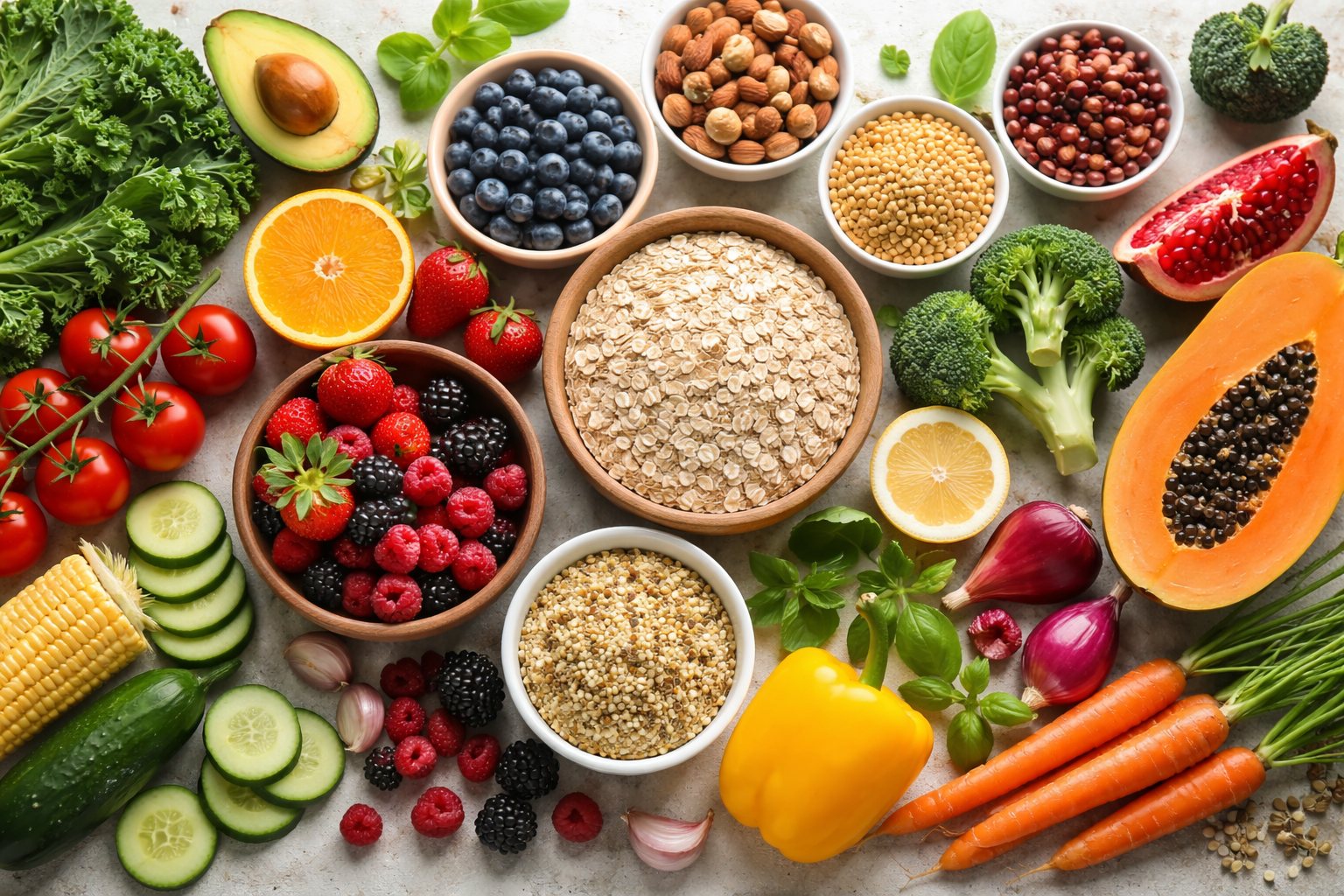
- Fruits and vegetables
- Whole grains
- Nuts and seeds
- Lean proteins
Why Whole Foods Matter
Whole foods are:
- More filling
- Lower in calories (per volume)
- Rich in nutrients
Best High-Fiber Foods
- Oats
- Brown rice
- Beans and lentils
- Vegetables (broccoli, carrots)
- Fruits (apples, bananas)
Tips to Increase Fiber Intake
- Eat more vegetables
- Choose whole grains over refined grains
- Snack on fruits instead of processed foods
- Add legumes to meals
Common Mistakes
- Increasing fiber too quickly (can cause bloating)
- Not drinking enough water
- Relying on processed “healthy” foods
Conclusion
Fiber and whole foods are essential for sustainable weight loss. They help control hunger, improve digestion, and support overall health.